
Across university writing centers, disability resource offices, and student forums in 2026, a troubling pattern keeps repeating: neurodivergent students—including autistic writers, students with ADHD, and students with dyslexia—spend days researching and writing original essays, only to be hit with a neurodivergent AI detector false positive.
Why do statistical AI detectors so frequently mistake authentic neurodivergent writing for ChatGPT or Claude? Just as we saw in our investigation into why AI detectors flag ESL and non-native English writers, the answer lies in how detection algorithms score rule-based syntax, precise vocabulary, and assistive writing tools. Below, we explain the five linguistic triggers behind these false alarms, show how to inspect your draft privately using the sentence heatmap on our free AI essay detector, and provide a complete self-advocacy kit for students and educators.
Quick Answer: Why Do AI Detectors Flag Neurodivergent Writing?
- Systemizing & rule-based grammar lower perplexity: Many autistic and neurodivergent writers treat essay rubrics and grammar rules as exact systems—producing logical, symmetrical sentences that statistical models misread as machine-generated.
- Literal, formal vocabulary choices: Using precise, formal terms (such as "consequently," "utilize," or "facilitate") in everyday essays overlaps with the vocabulary distribution of large language models.
- Approved assistive technology can trigger flags: While basic spellcheck and speech-to-text are safe, disability accommodations that include full-sentence grammar rewriters can overwrite a student's natural sentence burstiness.
- Process logs and sentence heatmaps protect your voice: Keeping Google Docs version history enabled and checking drafts on aiessaydetectors.com lets you spot stiff transitions without sacrificing your authentic thinking style.
In This Neurodivergent Writing & AI Guide (Quick Jump):
- 5 Reasons AI Detectors Misclassify Autistic, ADHD & Dyslexic Writers
- Video #1: Why Honest Writers Are Being Accused of Using AI
- Assistive Technology & Accommodations Matrix: What Is Safe vs. Risky?
- Live Sentence Heatmap: Rule-Based Transitions vs. Specific Evidence
- Video #2: How Schools Are Adapting to Support Neurodivergent Students
- 5-Step Self-Advocacy & Proof-of-Authorship Plan (+ Email Template)
- Frequently Asked Questions (FAQ)
1. 5 Reasons AI Detectors Misclassify Autistic, ADHD & Dyslexic Writers
As we explain in our technical guide on perplexity vs. burstiness in AI detection, automated detectors do not measure honesty or effort—they measure whether your sentence lengths and word transitions deviate from statistical averages. Five natural neurodivergent writing habits frequently collide with those algorithms:
- 1. Strict Adherence to Structural Rubrics: When a professor provides a detailed grading rubric or paragraph formula, many autistic and ADHD writers follow that template to the letter as an executive-functioning scaffold. Writing every body paragraph with the exact same four-sentence structure lowers statistical burstiness.
- 2. Explicit Signposting & Logical Connectors: Neurodivergent writers often value unambiguous logical transitions—starting sentences with "First," "Second," "Therefore," "Additionally," and "Consequently" so the reader never has to guess how two ideas connect. Because chatbots also rely heavily on explicit signposting, detectors flag those transitions.
- 3. Formal, Encyclopedic Tone on Deep-Interest Topics: When writing about a specialized academic subject, many neurodivergent students naturally adopt a precise, objective, encyclopedic register rather than casual conversational slang.
- 4. Hyperfocus Drafting Sessions or External Scratchpads: A student with ADHD may spend a week thinking about an essay, then type 1,200 words in a single late-night hyperfocus session—or draft in a distraction-free app (like Notion or Obsidian) and paste the text into Google Docs. Without incremental history in the final file, teachers using revision-replay extensions may misinterpret the workflow.
- 5. Heavy Use of Assistive Spelling & Grammar Checkers: Students with dyslexia or dysgraphia frequently rely on assistive software to catch phonetic spelling mistakes or omitted words. If that software is set to rewrite entire clauses for "fluency," it replaces human burstiness with synthetic syntax.
How Assistive & Structural Habits Affect AI Detector Scores on 100% Human Drafts
2. Video Deep Dive: Why Honest Writers Are Being Accused of Using AI
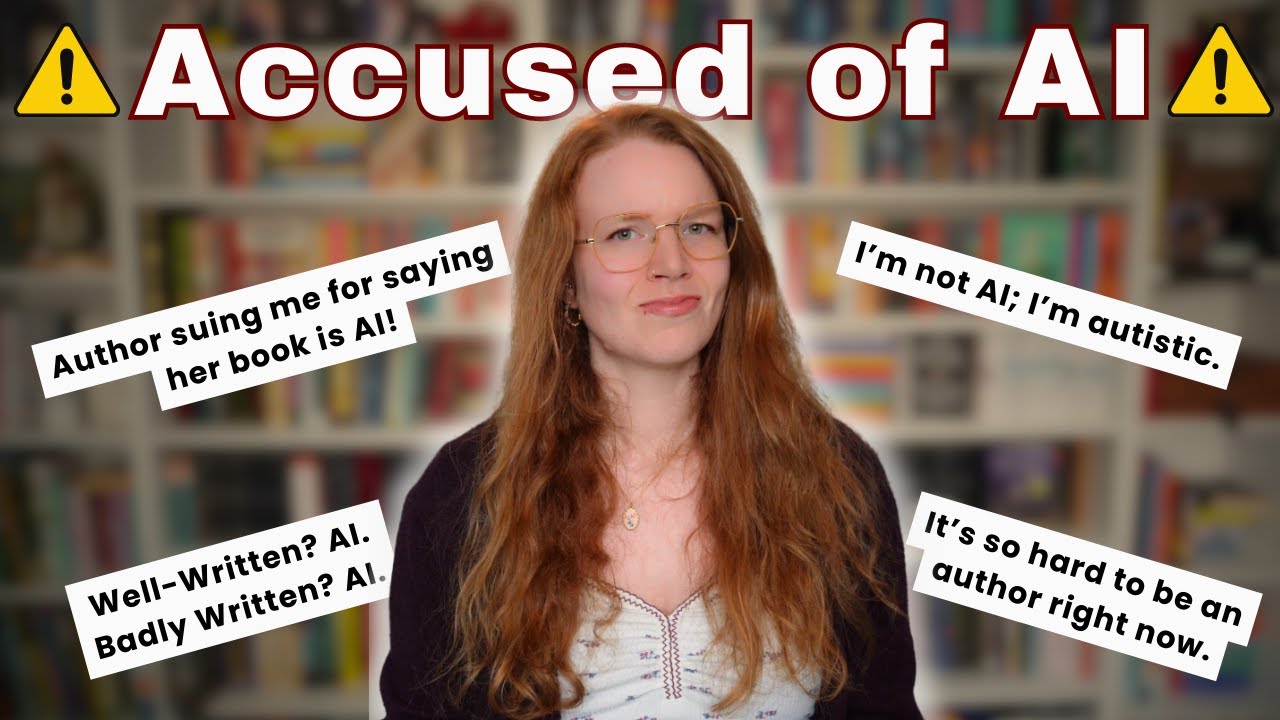
To hear firsthand why neurodivergent and detail-oriented writers are so frustrated by over-sensitive AI flags—including the myth that proper punctuation like em-dashes or semicolons "proves" AI authorship—watch this widely shared video essay from Ches Is Hyperfixating on YouTube:
Video 1: Writers Are Being Accused of Using AI — No Matter What They Do — Exploring how false positives impact students and writers (Watch on YouTube).
3. Assistive Technology & Accommodations Matrix: What Is Safe vs. Risky?
Many neurodivergent students have formal 504 plans, IEPs, or university disability accommodations for assistive technology. However, not all assistive tools affect AI detectors the same way. Review this comparison table before turning in your next assignment:
| Assistive Tool / Writing Strategy | AI False-Positive Risk | How It Impacts Perplexity & Burstiness | Best Practice for Students |
|---|---|---|---|
| Speech-to-Text Dictation (Google Voice Typing, Dragon, Mac Dictation) | Very Low (Safe) | Preserves your natural spoken cadence and varied sentence lengths (high burstiness). | Dictate directly into Google Docs or Word so your revision log captures every session. |
| Text-to-Speech Screen Readers (NaturalReader, Speechify, Read&Write) | Zero Risk (Safe) | Listening to your draft read aloud helps you catch typos manually without altering syntax. | Ideal for proofreading without using generative AI rewriters. |
| Phonetic Spellcheck & Word Prediction | Low (Safe) | Fixes single-word spelling mistakes while keeping your original clause order intact. | Accept single-word spelling fixes rather than whole-sentence suggestions. |
| Mind-Mapping & Visual Outliners (Inspiration, MindMeister) | Low (Safe) | Organizes ideas visually; just avoid pasting a finished 1,000-word draft into Docs all at once. | Keep your visual mind map saved as a PDF to show your instructor if asked. |
| Full-Sentence "Tone" or "Fluency" Rewriters (Grammarly Pro, Word Copilot) | High Risk | Replaces your authentic sentence architecture with high-probability LLM phrasing. | Turn off generative sentence rewrites—see our Grammarly AI detector test. |
4. Live Sentence Heatmap: Rule-Based Transitions vs. Specific Evidence
You do not need to "dumb down" your vocabulary or add fake typos to avoid false positives. Instead, paste your draft into aiessaydetectors.com and look at the Sentence Heatmap. Usually, a false flag is caused by stacking formal transition words at the start of every sentence. See how keeping your exact same analytical precision—while trimming stiff connectors and adding concrete source details—turns a paragraph from Red to Green:
Version A: Rule-Bound Template with Stacked Formal Transitions (Scores 69% AI)
73% (Red) – Furthermore, sensory overload in open-plan classrooms significantly impairs executive functioning and working memory retention.
68% (Red) – Moreover, fluorescent lighting and ambient background noise create continuous cognitive fatigue for neurodivergent learners.
45% (Amber) – Consequently, educational institutions must implement universal design accommodations to foster equitable learning environments.
Version B: Authentic Precision + Varied Sentence Lengths & Citations (Scores 4% AI)
4% (Green) – In a 2024 acoustic study of 18 elementary classrooms, background chatter above 65 decibels cut working-memory recall scores among autistic students bynearly a third ( Connolly et al., p. 212).
2% (Green) – Noise is only half the problem.
6% (Green) – Pairing flickering 60-hertz fluorescent tubes with crowded group tables forces neurodivergent students to spend their mental energy filtering sensory input instead of outlining their essays.
Notice that Version B is just as intelligent, formal, and precise as Version A—it simply drops the repetitive "Furthermore / Moreover / Consequently" openers (see our list of 50 overused AI words to avoid), cites a specific study and page number, and places a crisp 6-word sentence between two longer analytical sentences.
5. Video Report: How Schools Are Adapting to Support Neurodivergent Students
As schools and universities recognize that neurodivergent minds learn, organize, and communicate differently, educators are updating both classroom design and assessment practices. Watch this report from ABC News on YouTube on how inclusive classrooms support neurodivergent learners:

Video 2: How classrooms are changing to support neurodivergent students (Watch on YouTube).
6. 5-Step Self-Advocacy & Proof-of-Authorship Plan (+ Email Template)
You never have to disclose a private medical diagnosis to a professor if you do not want to. However, combining objective writing-process proof with support from your campus Disability Services (or high school 504/IEP coordinator) resolves false flags quickly:
- Do All Outlining & Drafting Inside One Tracked Cloud File: Even if you prefer bullet-point brain-dumps or color-coded outlines, create them at the top of the exact same Google Doc or Word file you will submit, rather than pasting from a separate notes app. See our guide on how to prove you wrote your essay with version history.
- Register Assistive Software in Your Accommodation Letter: If you use speech-to-text dictation, screen readers, or specialized spelling tools, ask your Disability Services coordinator to list "assistive writing and dictation software" explicitly on your faculty accommodation letter at the start of the semester.
- Establish an Early Writing Baseline with Your Instructor: Share an early outline or rough paragraph during office hours in week two or three. Once an instructor knows your natural analytical voice and deep-dive style, they will recognize your work immediately.
- Loop In Your Disability Resource Advisor If Flagged: If a professor questions your essay based on an AI detector score, forward the email to your campus Disability Services advisor before the meeting. They can educate the faculty member on how statistical detectors misclassify neurodivergent and assistive-tech writing.
- Show Your Primary Sources & Paraphrasing Process: Bring your highlighted PDFs, research notes, and outline. Following structured academic citation practices from the Purdue OWL Paraphrasing Guide and Harvard College's academic integrity guidelines demonstrates unmistakable independent scholarship.
Copy-Paste Email Template: Responding to a False AI Flag on Your Essay
Subject: Writing Process & Version History for [Assignment Name] – [Your Full Name]
Dear Professor [Last Name],
Thank you for reaching out regarding my essay for [Course Name]. I want to assure you that I researched, outlined, and wrote this paper independently.
Because I write using a highly structured, rule-based outlining method [optional: and use approved assistive dictation/spellcheck software registered with Disability Services], automated AI detectors sometimes flag my formal transitions as low-perplexity text. I have attached a link to my full Google Docs / Word version history showing my incremental drafting from [Start Date] to [Submission Date], along with my initial bullet-point outline and annotated source PDFs.
I would be glad to meet during office hours this week (or provide a written walkthrough, depending on your preference) to discuss my research and thesis in detail. [Optional: I have also copied my advisor in the Office of Disability Services for context on my writing workflow.]
Best regards,
[Your Name & Student ID]
7. Frequently Asked Questions (FAQ)
1. Does using em-dashes (—), semicolons, or colons really trigger AI detectors?
Punctuation marks alone do not cause a high AI score on statistical detectors like Sapling or Turnitin, which evaluate token predictability across entire clauses. However, some human graders mistakenly assume em-dashes or semicolons are "AI tells." Having your Google Docs version history ready proves that your punctuation is simply part of your personal writing style.
2. Should I intentionally add typos or bad grammar so my essay looks more human?
Never. Intentionally introducing spelling errors or awkward slang lowers your grade and is completely unnecessary. Instead, use the sentence heatmap on aiessaydetectors.com to spot repetitive transition words and vary your sentence lengths naturally.
3. What if I drafted my essay in Notion, Obsidian, or Apple Notes and pasted it into Google Docs?
If you already submitted the paper and a teacher questions the single paste in Google Docs, export the creation timestamp and revision history from Notion, Obsidian, or Apple Notes, and bring your research browser history. Moving forward, always type your rough notes directly inside the final Google Doc.
4. Do I have to disclose my autism, ADHD, or dyslexia diagnosis to appeal a false AI accusation?
No. Medical and neurodevelopmental diagnoses are private. You can exonerate your paper using purely objective evidence—your timestamped revision log, source notes, and subject mastery—or ask your campus Disability Services office to advocate on your behalf without sharing sensitive medical details. Read our full guide on appealing a false AI accusation in college.
5. Is Free AI Essay Detectors safe for students checking unsubmitted coursework?
Yes. Free AI Essay Detectors never stores, logs, or shares your text with Turnitin or any academic database, so you can safely inspect your sentence-by-sentence heatmap before turning in your assignment.
Conclusion: Precision and Structure Are Human Strengths
Experiencing a neurodivergent AI detector false positive is deeply unfair, because clear structure, precise vocabulary, and logical consistency are strengths—not evidence of misconduct. By keeping your entire drafting process inside a single version-tracked document, avoiding full-sentence grammar rewriters, and checking your transitions with the zero-storage sentence heatmap on Free AI Essay Detectors, you can protect your authentic voice and submit your work with confidence.
Disclaimer: AI detection scores are statistical estimates, not proof of authorship. Never use an automated score as the sole basis for an academic or disciplinary decision.
