
You have an essay open and one question: did ChatGPT write this, or does it just read that way? A good ChatGPT detector gives you a fast answer without a signup or a paywall. But many free tools are vague, inaccurate, or quietly store what you paste in.
Here is the short answer. The best free tools score your text in seconds, show which sentences look machine-written, and say plainly that the result is an estimate. No detector can prove who wrote a paper. Treat any score as a prompt to look closer, not a verdict.
Below, you will find seven free picks for checking essays, papers, and articles. We compare them on accuracy, free usage limits, privacy, and how clearly they explain results. We run AI Essay Detectors, a free sentence-level checker built on the Sapling engine, so we know what separates a useful tool from a misleading one. Whether you are a student, teacher, or editor, you will know which one fits your text.
1. AI Essay Detectors
What it does
AI Essay Detectors is our own free ChatGPT detector, so we will be upfront about that. You paste English text, up to 6,000 characters, and get an instant analysis with no account or signup. The text goes to the Sapling detection API, and the page shows:
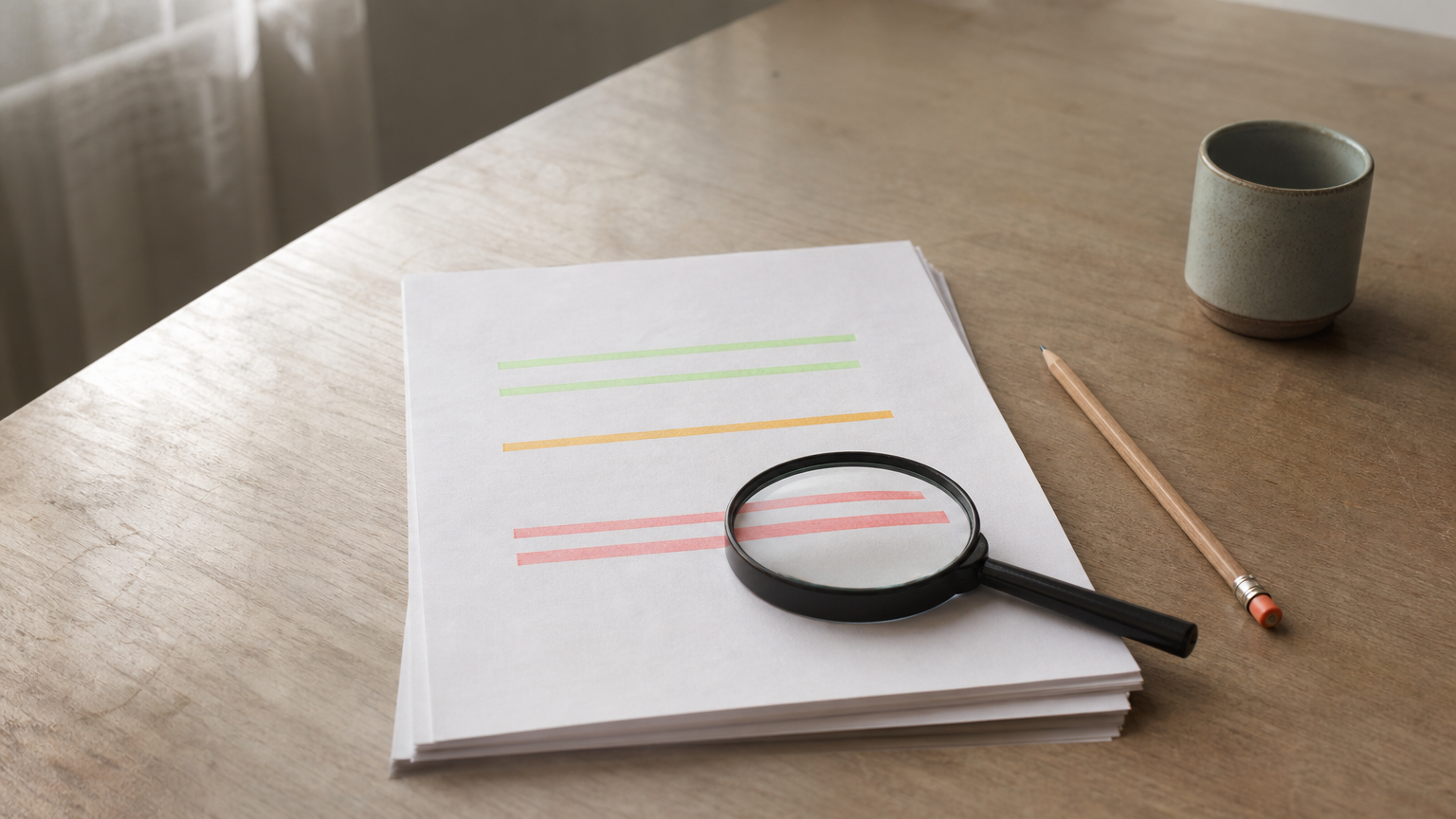
- Overall AI probability: the estimated chance the whole text was written by AI.
- AI fraction: the share of sentences scoring 50 percent or higher, useful for drafts that mix human and AI writing.
- Sentence heatmap: green leans human, amber is uncertain, red leans AI.
- Extras: a word and character counter, sample text, a clear button, and a copy results button.
Accuracy and limits
Sapling is an established engine, and the heatmap is where this tool earns its keep. One number hides the problem, while color-coded sentences show you exactly which lines to rewrite in your own words. Even so, every score is a statistical estimate, not proof of who wrote the text.
False positives happen. Short, formal, or non-native English writing can come back amber or red even when a person wrote every word, which is why human-written essays get flagged as AI. Use the tool to detect ChatGPT writing patterns, then talk to the writer before you decide anything.
A detector score should start a conversation, not end it.
Pricing and limits
Use costs nothing, and there is no signup. The trade-off is a daily limit per visitor, plus the 6,000-character cap, so long papers need to be checked in sections.
| Item | Detail |
|---|---|
| Cost | Free |
| Account | Not required |
| Input | English text, up to 6,000 characters |
| Usage | Daily limit per visitor |
| Privacy | Text is not stored on the site |
Who it is best for
Students get the most from it. Run a draft through before you submit, find the red sentences, and rework them. Teachers and editors can use it as a quick second opinion on an assignment or guest post.
Skip it if you need bulk uploads, file support, or a classroom dashboard. This is a lightweight checker, built for fast, private, one-off checks rather than institutional workflows.
2. GPTZero
What it does
GPTZero is one of the best-known AI detectors for ChatGPT, started by Princeton student Edward Tian in early 2023. You paste text or upload a file, and it labels the document as human, mixed, or AI. It also highlights individual sentences and checks for other models, such as Gemini and Claude, not just ChatGPT writing.
- Probability scores for human, mixed, and AI text
- Sentence-level highlighting
- File uploads and a browser extension
Accuracy and limits
Vendors publish strong accuracy claims, and GPTZero is no exception. Independent tests vary, though, and results shift as models change. It can also misflag formal or non-native English.
An accuracy figure is a vendor's claim, not a guarantee about your essay.
Mixed documents are the hardest case. Lean on the sentence highlights, not the headline verdict, and never treat one score as proof.
Pricing and limits
The free plan works for occasional checks, but it caps how many words you can scan each month. Paid tiers raise those caps. Plans change often, so confirm current rates on the GPTZero site.
| Plan | Fits |
|---|---|
| Free | A few essays per month |
| Paid | Higher word limits, batch uploads, reports |
Who it is best for
Teachers get the most from it. The file uploads and classroom-friendly reports save time when you review a stack of assignments.
Students can use it too. If you only need one quick, no-fuss check, a lighter tool like ours is faster, since the free tier can run out mid-semester.
3. Quillbot AI Detector
What it does
Quillbot's detector is a free ChatGPT detector that works without an account. Paste your text and it estimates how much was written by AI, including output from ChatGPT, Gemini, and similar models. It also tries to spot AI-refined text, meaning writing that a person ran through a paraphraser.
- Percentage split between AI-generated, AI-refined, and human text
- Color-coded highlights by sentence
- Support for several languages
Accuracy and limits
Results look clean, but the AI-refined label is the shakiest part. Text polished with a grammar tool can land there even when you wrote every idea yourself. Short passages give weaker signals, too.
Treat the AI-refined label as a hint, not an accusation.
Quillbot publishes accuracy claims, as most vendors do. Independent results vary, so test it on writing you know before you trust it on someone else's paper.
Pricing and limits
Checking is free and needs no signup, but the free version caps input at roughly 1,200 words per scan. Premium raises that limit. Confirm current numbers on Quillbot's site, since they change.
| Tier | Fits |
|---|---|
| Free | Short essays, quick checks |
| Premium | Longer documents |
Who it is best for
Students who already use Quillbot to paraphrase will find it handy, since you can see how a rewrite reads to a detector before you submit. Editors screening short guest posts can use it too.
Long papers are a weaker fit. You will need to split the text into chunks or pay for the higher cap.
4. Grammarly AI Detector
What it does
Grammarly's detector gives you a percentage of text that looks AI-generated, and you can run it on the web or inside the editor you already use for grammar checks. It also offers an AI originality checker that pairs detection with plagiarism scanning, which suits any paper headed for a grader or an editor.
- Overall share of AI-like text
- Flagged passages in the editor
- Authorship, a feature that records how a document was written in supported editors
Accuracy and limits
Grammarly says its detector is not proof of misconduct, and that is the right framing. The odd risk here is the company's own product. Grammarly's rewrite suggestions can push human writing toward a flatter, machine-like style, so a polished draft may score higher than it should.
A heavily edited human draft can look like AI to a detector.
You also get less sentence-level detail than a heatmap offers, so it is harder to see which lines to fix.
Pricing and limits
A basic web checker is free, but deeper originality checks and in-editor detection usually sit behind paid plans. Plans change often, so confirm current limits on Grammarly's site.
| Tier | Fits |
|---|---|
| Free | Quick checks on short text |
| Paid | Originality reports inside the editor |
Who it is best for
People who already write in Grammarly get the most from it, since the check lives where they draft. Students can use Authorship to show their writing process if a teacher questions a paper.
Skip it if you want a free, no-account, sentence-by-sentence check. A lighter tool will be faster.
5. Scribbr AI Detector
What it does
Scribbr's detector is a simple AI detector for ChatGPT and other popular models. Paste your text, click once, and you get a percentage estimate of how much looks AI-generated. It works without an account and sits next to Scribbr's plagiarism checker, so it suits an AI detection paper check before you submit.
Accuracy and limits
Scribbr publishes its own test results, but those are vendor numbers, not a promise about your essay. Like every tool here, it can misflag formal or non-native English and gets shakier on short passages. You also get less sentence-level detail than a heatmap, so it is harder to know which lines to rewrite.
One percentage tells you something may be off, not where.
Pricing and limits
Free use caps each check at roughly 500 words, so a full paper has to be split into sections. A premium plan raises that limit for a fee. Limits change, so confirm current numbers on Scribbr's site.
| Tier | Fits |
|---|---|
| Free | Short essays, single sections |
| Premium | Full-length papers |
Who it is best for
Students who already use Scribbr for citations or proofreading will like having everything in one place. It is a calm, easy first check for a short essay.
Skip it if you want a sentence-by-sentence breakdown with no word cap. A heatmap tool will tell you more.
6. Originality.ai
What it does
Originality.ai is a paid detector built for publishers and content teams. You paste text or scan a URL, and it returns an AI score alongside a plagiarism check and readability stats. Its Chrome extension can also show a document's writing history in Google Docs. If you want an AI originality checker that covers a whole site or a team of freelancers, this is the heavy-duty option.
Accuracy and limits
The company publishes high accuracy figures from its own studies, but those are vendor claims. It offers several detection models, and the stricter ones flag more text, which means more false positives on human writing. Formal prose and non-native English are still at risk.
A stricter detector catches more AI, and it also accuses more innocent writers.
Run it on writing you know is human before you trust it on a freelancer's draft. Then check the flagged passages by hand.
Pricing and limits
Full use is not free. You get a small free scan on the site, while paid plans run on credits, roughly one credit per 100 words. Pay-as-you-go and monthly options exist, and rates change, so confirm current pricing on the Originality.ai site.
| Option | Fits |
|---|---|
| Free scan | Testing a short sample |
| Pay as you go | Occasional bulk checks |
| Subscription | Ongoing team review |
Who it is best for
Editors, agencies, and SEO teams get the most value, since bulk scanning and plagiarism checks sit in one place. It suits anyone vetting guest posts at volume.
Students checking a single essay should look elsewhere. A free, no-signup tool answers that question without a credit balance.
7. Paperpal AI Detector
What it does
Paperpal is an academic writing assistant, and its detector is built for research papers and manuscripts. As a ChatGPT detector, it estimates how much of your pasted text looks AI-generated, including output from similar models. It sits beside Paperpal's editing and plagiarism tools, so it works well as an AI detection paper check for theses and journal submissions.
- Percentage estimate of AI-like text
- Flagged passages to review
- Reports aimed at academic writing
Accuracy and limits
Like every tool here, Paperpal gives a statistical estimate, not proof. Tuning for scholarly prose helps, but formal, technical writing is exactly what detectors misread, and non-native English authors face extra risk.
Formal academic prose is the hardest thing for any detector to judge fairly.
Vendor accuracy claims deserve the same caution as the rest. Run a section you wrote yourself first, then check flagged passages by hand before drawing conclusions.
Pricing and limits
You can try it free, but free checks are limited and fuller reports usually sit behind a paid Paperpal plan. Limits change, so confirm current details on Paperpal's site.
| Tier | Fits |
|---|---|
| Free | A few trial checks |
| Paid | Regular manuscript screening |
Who it is best for
Researchers, graduate students, and journal authors get the most from it, since it lives next to editing tools they already use. It suits a final check before submission.
Skip it for casual text when you want unlimited quick checks. A lighter tool will be faster for that.
How ChatGPT detectors work and how far to trust them
How detection works
Most ChatGPT detector tools are classifiers trained on large piles of human and AI text. They measure how predictable your word choices are (perplexity) and how much sentence length and structure vary (burstiness). AI models favor likely words, so their prose runs smooth and even. Human writing is usually messier.
That logic breaks easily. Formal essays, textbook prose, and non-native English are also predictable, so they get flagged by mistake. Light editing or paraphrasing of AI text can push scores the other way. Can ChatGPT detect AI text itself? Not reliably. OpenAI shut down its own AI classifier in 2023 because of its low accuracy.
How far to trust a score
Treat a result as a screening signal, never as evidence. A high score tells you where to look, and a low score does not clear a text either.
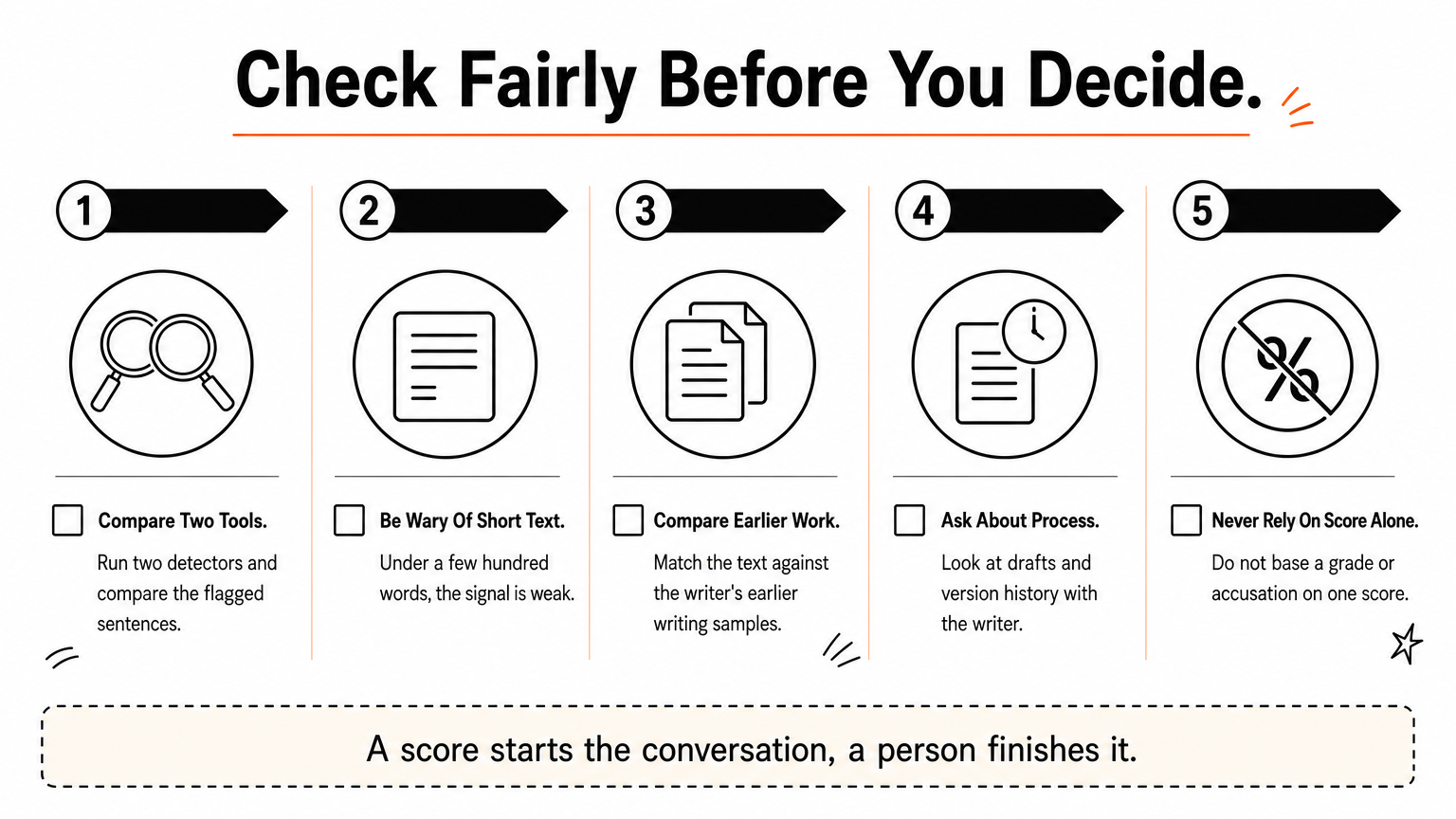
A detector can raise a question, but only a person can answer it.
Some habits keep you fair and accurate:
- Run the text through two different tools and compare the flagged sentences.
- Check short passages with extra caution, since under a few hundred words the signal is weak.
- Compare the text with the writer's earlier work.
- Ask about the process, and look at drafts or version history.
- Never base a grade, a rejection, or an accusation on a score alone.
Choosing the right detector for your text
Pick the tool that matches your text, not the one with the boldest accuracy claim. For a quick, private check on a single essay, a free tool with no signup is enough. For long manuscripts, bulk guest posts, or classroom reports, a paid option such as Originality.ai, GPTZero, or Paperpal earns its cost.
Whatever you choose, remember what every ChatGPT detector has in common: it gives an estimate, not proof. The best pick shows you which sentences look machine-written, admits its limits, and leaves the final call to a person. When the stakes are high, run two of the best free AI essay checkers ranked by accuracy and never decide on a score alone.
Ready to try one? Paste your draft into AI Essay Detectors for a free, sentence-by-sentence check with no account, then rewrite the red lines in your own words. It takes less than a minute, and your text is not stored.
